








Hiring global talent is key to weathering economic downturns. Geographically distributed teams give you the flexibility to scale up in stable markets while pulling back in volatile ones, making international recruitment a priority for today’s HR teams. But there’s one common mistake many companies make that can trigger large compliance fines: a one-size-fits-all employee benefits plan.
Denis Kelly, G-P’s Global Benefits Manager, knows benefits plans determine whether top-tier candidates walk away or accept your offer. In a recent webinar, Kelly shared how companies can move beyond the costly pitfall of one-size-fits-all employee benefits plans by integrating global consistency with local cultural relevance. His blueprint focuses on building localized benefits packages that turn a legal requirement into your competitive advantage.
The real price of a one-size-fits-all employee benefits plan
A one-size-fits-all employee benefits plan ignores the nuances across global markets. As someone who recently transitioned from advising clients to managing global benefits internally, Kelly knows this challenge well.
“As a benefits specialist here at G-P, I’m now the client of that benefit consultant industry,” he says. “It’s been an eye-opener to the work that HR teams are doing around the world. In hindsight, I think about how little I knew when I was consulting.”
In a competitive labor market, the stakes for getting employee benefits right are high. As Kelly explains: “Ultimately, we want to try and avoid a negative employee benefits plan design. That then has a knock-on effect on recruitment and retention.” A failure to localize your benefits package — the definition of a negative employee benefits plan — leads to two costly outcomes:
-
Compliance penalties: Missing specific local rules can be costly. In the U.S., employee benefits change state by state. Without local expertise, your company risks fines, delays, or even hiring bans.
-
Losing your talent: Generic employee benefits packages discourage top candidates and impact employee satisfaction. Gartner research shows that diverse and inclusive workplaces (which you need culturally relevant benefits to build) see a 12% increase in performance.
Tune in as Kelly breaks down employee benefits plans.
Globally consistent, locally relevant
Companies need an employee benefits package that’s both globally consistent and tailored to local expectations. Employee expectations vary by country and industry.
In Sweden, over 90% of employees get the same benefit structure because most are covered by Collective Bargaining Agreements (CBAs) that standardize benefits across industries. In contrast, in the U.K. and Ireland, CBA coverage is much lower and more sector-specific, so expectations around healthcare, life insurance, and income protection are often shaped by individual employer policies and national systems.
“It’s about making sure you’re consistent, relevant to the market, and not just applying a one-size-fits-all approach,” says Kelly.
He uses the example of life insurance to illustrate how cultural context shifts perception. In the U.K., life insurance is an expectation — 80% of companies offer it, making it a standard offering. In Finland, it’s the opposite. Only 30% of companies offer it. Employees can even push back because of tax implications. Forcing the U.K. standard onto a Finnish employee base is a waste of money and damaging to employee relations.
The blueprint: 3 practical steps to win
“As a consultant, I told clients what to do. Now, in G-P, my job is to ensure it’s done,” says Kelly. His experience offers an actionable framework for teams starting their localization journey:
-
Benchmark for consistency: Start with a clear philosophy, then rely on local information to meet expectations. “Establish your benefits philosophy and align on your market benchmarks,” Kelly advises.
-
Collaborate with local experts: Build a step-by-step review process where local brokers, insurers, and vendors provide cultural and legal vetting. “Talk to local experts — brokers, vendors, or HR professionals — to ensure your plan is culturally relevant and compliant.”
-
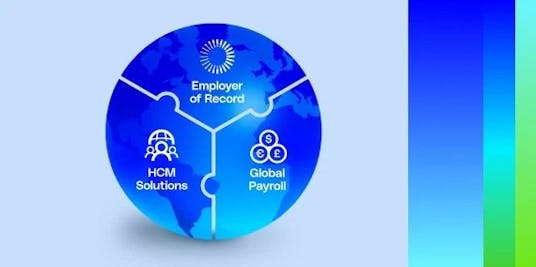
Use verified technology and models: Technology can simplify benefits planning, but it has to be built on trusted expertise. “Use AI tools like G-P Gia™ that are built on trusted and verified resources. Consider the EOR (employer of record) model as a solution. As I said before, consultants tell you what to do, but G-P as your EOR ensures it’s done,” Kelly says.
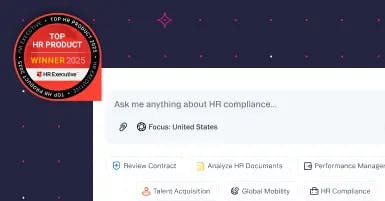
Gia is built by HR, payroll, and legal professionals and cuts the cost and time of compliance by up to 95%. You get instant, verified guidance on global employment compliance, HR best practices, payroll, and benefits. For example:
-
Thailand: The government planned to have a new managed retirement plan in October 2025, but it was pushed back to October 2026. Gia was updated with this information, making sure users had the latest guidance.
-
Ireland: The introduction of auto-enrollment for pensions in Ireland is generating discussion. Gia provides clear, verified, and up-to-date information to help users navigate this complex topic.
Global benefits made easy
Understanding what makes a good global employee benefits package is the first step; putting it into action is the second. G-P can help you hire globally and offer competitive benefits plans in 180+ countries. We have 13+ years of global employment experience and give you the guidance you need to create a global benefits strategy.
“We aggregate the needs of multiple customers and employees, leveraging our scale to negotiate better terms, remove waiting periods, and enhance conditions. This reduces effort, time, and cost for our customers,” says Kelly.
For more tips to turn your employee benefits into your competitive edge, check out the webinar or book a demo to talk with one of our sales experts today.