










Successfully managing payroll in Estonia requires a deep understanding of the country’s tax and labor regulations. Adhering to these rules is essential for compliance and ensuring your employees are paid accurately and on time.
Navigating these complexities can be challenging, especially for companies expanding into the country for the first time. An Estonia EOR simplifies this process. By leveraging our in-country entity and expert team, you can manage payroll, benefits, and HR in Estonia without establishing your own subsidiary, ensuring full compliance from day one.
Payroll and tax regulations in Estonia
In Estonia, both employers and employees contribute to the country’s social security system through payroll taxes and deductions.
Employer payroll contributions in Estonia
-
Social tax: Employers are liable for a social tax at a flat rate of 33% of an employee’s gross salary. This tax is not capped. The funds are allocated to state pension insurance (20%) and health insurance (13%). This is paid by the employer on top of the employee’s salary.
-
Unemployment insurance contribution: Employers contribute 0.8% of the employee’s gross salary to the unemployment insurance fund.
Employee payroll deductions in Estonia
-
Unemployment insurance contribution: Employees contribute 1.6% of their gross salary to the unemployment insurance fund.
-
Funded pension (II Pillar): For employees born after 1983, a contribution of 2% of gross salary to a mandatory funded pension scheme is required. The state adds 4% from the employer-paid social tax to this contribution. Employees born before 1983 may join voluntarily.
Estonia income tax
Estonia has a flat personal income tax (PIT) rate of 22%, which is withheld by the employer. Individuals are entitled to a basic tax-free allowance of €700 per month (€8,400 annually).
Unlike in previous years, this allowance is now universal; it no longer decreases as income increases and remains available to all individuals regardless of their total earnings. This change, effective from January 1, 2026, has abolished the previous 'tax hump' system.
Payroll administration in Estonia
To ensure compliance, companies must follow specific payroll administration procedures.
-
Payroll cycle: Salaries in Estonia are typically paid on a monthly basis.
-
Reporting and payments: Employers must declare all taxes and contributions on a single tax form (TSD) and submit it to the Estonian Tax and Customs Board (ETCB) by the 10th day of the month following the salary payment.
-
Payslips: Employers are legally required to provide employees with a clear and detailed payslip for each pay period, outlining gross pay, all deductions, and the net amount paid.
Estonia payroll options for companies
Companies have several payroll options in Estonia:
-
Internal payroll: Larger companies with a long-term commitment to Estonia might establish an internal payroll department. This requires hiring local HR and legal experts to navigate compliance.
-
Local payroll provider: Outsourcing to a local payroll processing company can handle calculations and payments, but the employer remains legally responsible for all compliance matters.
-
Employer of record: Partnering with G-P as your employer of record is the most comprehensive solution. We handle all aspects of Estonia payroll, tax, and compliance, taking on the associated liabilities and allowing you to focus on your business growth.
How to set up payroll in Estonia
Traditionally, setting up payroll in Estonia requires first establishing a legal entity, a process that can be time-consuming and complex. G-P’s EOR model bypasses this requirement. We can hire and onboard employees on your behalf through our existing, fully compliant Estonian entity, enabling you to start operations in a fraction of the time.
Termination and final pay in Estonia
Employers must adhere to statutory notice periods when terminating an employment contract. The notice period depends on the employee’s length of service:
-
Less than 1 year of employment: 15 calendar days
-
1 to 5 years of employment: 30 calendar days
-
5 to 10 years of employment: 60 calendar days
-
More than 10 years of employment: 90 calendar days
Probationary periods of up to 4 months are permitted. All final salary and outstanding payments must be settled on the employee’s last day of work.
Streamline global payroll management with G-P
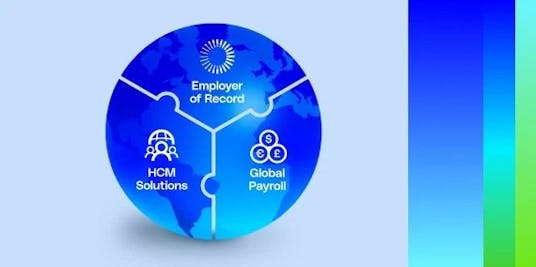
G-P streamlines each step of the payroll management process with our market-leading EOR platform. Pay your team with confidence anywhere in the world in 150+ currencies with our 99% on-time automated payroll system — all with just a few clicks. Our products also integrate with leading HCM solutions, syncing employee payroll data across platforms automatically to create one reliable, convenient source of truth for HR teams.
Contact us to learn more about how we can support you.