









The everywhere workforce is here. But keeping track of country-specific employment laws and regulations can be challenging. It's a 24/7 commitment. The right employer of record (EOR) solution and advanced HR AI tools can ease the burden.
An EOR helps you mitigate risks and ensure legal compliance with international employment law. Let's explore what international employment law is and how it impacts your global workforce.
What is international employment law?
Employment law is a legal framework that governs the relationship between an employee and their employer. Each country has its own set of laws and regulations that apply to the employment relationship. There's no such thing as a universal legal framework that applies across every country.
Employment laws cover workplace safety, wages, benefits, pensions, working time, leave entitlements, antidiscrimination protections, termination regulations, and severance.
These regulations require employers, amongst other things, to provide a safe workplace, ensure fair wages and working conditions, and manage employee hours. Employment laws don't apply to independent contractors. Contractors are managed by service or consulting agreements, which means they don't get the same benefits, protections, or rights as employees. However, some countries have extended certain protections to dependent contractors, and classification rules are strictly enforced.
Employment laws outline rights and obligations for both employees and employers. Some examples of employer misconduct include:
-
Denying family and medical leave
-
Wrongful dismissal or termination
-
Age discrimination in employment
-
Failing to pay mandatory overtime
Who regulates international employment laws?
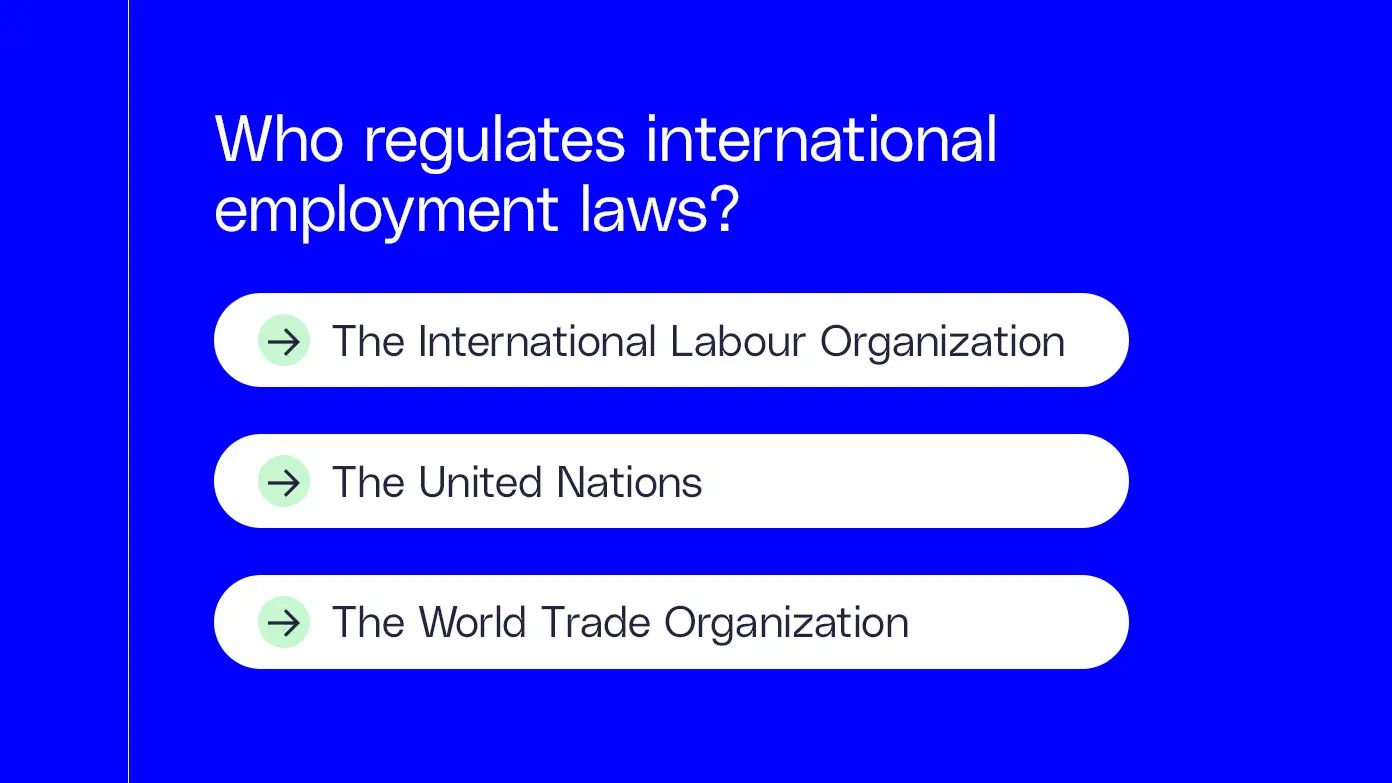
No single body regulates international employment law. Instead, a mix of international organizations, regional entities, and national governments shape the rules.
-
The International Labour Organization (ILO): The ILO develops conventions and recommendations that set minimum standards for fair work, labor rights, and workplace protections. These only become binding if adopted by individual countries.
-
The United Nations (UN): The UN establishes human rights principles that influence worldwide employment practices.
-
The World Trade Organization (WTO): The WTO addresses how labor and trade policies intersect, though it doesn't directly regulate employment law.
Some groups, such as the European Union, issue directives for member states, creating more uniform standards across countries. Other regions use frameworks through economic or political unions, though the level of enforcement varies. National governments are the main lawmakers and regulators. They create, enforce, and interpret employment laws at a country level.
International treaties, conventions, and bilateral agreements influence these laws, but employment matters are primarily domestic. Compliance with employment law will depend on the specific jurisdiction(s) where your teams are located.
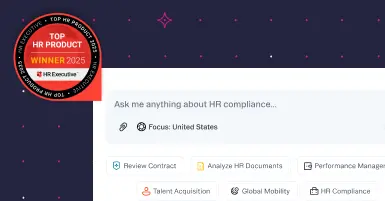
G-P Gia™ is a go-to resource for navigating international employment laws. Gia is agentic AI that reviews documents for compliance, identifies potential risks, makes jurisdictional recommendations, and gives you up-to-date compliance information.
Why is employment law important?
Employment laws govern the relationship between employers and employees. They ensure fair treatment, equality, and a healthy and productive work environment.
Employment law covers a range of issues, including:
-
Working conditions: Employment law ensures employees are provided a safe workplace, treated fairly, and are appropriately compensated.
-
Clear guidelines for employers: Regulations are built to promote a structured, legal framework for employers managing their workforce. Strong guidelines also reduce the risk of legal disputes and provide stability in the workplace.
-
Employee protection: Laws provide employees with protection against workplace discrimination or harassment on the basis of race, color, religion, sex, sexual orientation, or other characteristics.
-
Employee benefits: Employment law requires employers to give certain benefits to their employees, including health insurance, retirement plans, and paid annual leave.
-
Compliance and accountability: Employment law also ensures both employees and companies respect the terms of the employment contracts and regulations, which helps build a culture of accountability.
What's covered under international employment law?
Employment laws differ depending on the country. However, employment laws around the world cover fundamental elements that are crucial for businesses expanding globally, regardless of location. Key areas include:
Employment contracts
Each country has its own legal requirements, cultural norms, and statutory protections that influence the structure, content, and enforceability of employment contracts. For example, the U.S. doesn’t require employment contracts, and employment is at-will that allow termination of employment without notice or cause. In most countries, such as Italy, permanent contracts can't be terminated without a justified reason, and also offer more extensive guaranteed benefits for employees, such as national health insurance.
Wages and hours
Minimum wage and working hours differ depending on the jurisdiction. For example, France has a 35-hour workweek, while Japan has a 40-hour workweek.
Discrimination and harassment
Protections against workplace discrimination based on race, age, gender, religion, disability, or other protected characteristics exist across many countries. What is considered a protected characteristic may differ depending on the country.
Data privacy
Data privacy is critical for international employment law. As HR processes continue to digitize in the workplace, you need strong data protection measures and programs. Some countries, like those in the European Union, have comprehensive data protection laws, such as the General Data Protection Regulation (GDPR), that give individuals strong rights over their personal data.
Your business must protect employee privacy rights by adhering closely to each country's regulations.
Employee benefits
Employment law also covers regulations concerning health insurance, retirement plans, and other key benefits.
Layoffs, terminations, and other workforce reductions
Employment laws govern termination, including permissible reasons for dismissal, mandatory processes, wrongful termination, severance packages, and notice periods. In most countries, employers are obligated to give employees advance notice of termination and need a justified reason for ending the employment relationship.
Leave policies
Vacation, paid time off, and paternity and maternity leave are also outlined in local employment laws. For example, Norway offers a 12-month maternity leave, while the U.S. has no national law for paid maternity or paternity leave.
Diverse regulations and complex domestic employment laws across countries make it difficult to keep track of compliance. With Gia, you don't have to. Our agentic AI can:
-
Give you up-to-date information on employment laws, mandatory benefits, payroll requirements, and local labor practices in your target markets.
-
Advise on the HR, legal, and compliance requirements for hiring employees or contractors in new countries.
-
Guide you on best practices for competitive compensation and benefits packages.
-
Advise on visa, work permit, and relocation requirements for moving talent across borders.
What are some common challenges with global employment law?
Managing a global workforce involves navigating legal, cultural, and operational hurdles. Common challenges include:
-
Rapidly changing local laws: Regulations differ across jurisdictions and shift often, making compliance complex.
-
Language barriers: Employment contracts, policies, and legal requirements must have accurate translations to avoid misunderstandings.
-
Worker misclassification: Treating employees as contractors, intentionally or not, can lead to legal disputes and fines.
-
Managing payroll and benefits: Each country has unique tax systems, contributions, and benefits obligations.
-
Data privacy and compliance: Cross-border employment involves sensitive employee data, which is subject to protections like the GDPR.
-
Cultural differences: Varying workplace norms and expectations affect how policies apply and how employees engage with employers.
-
Consistent company policies: Aligning global standards with local practices means staying compliant without losing cohesion.
-
High cost and complexity: Meeting legal obligations across multiple countries requires resources and expertise.
Mastering international employment law
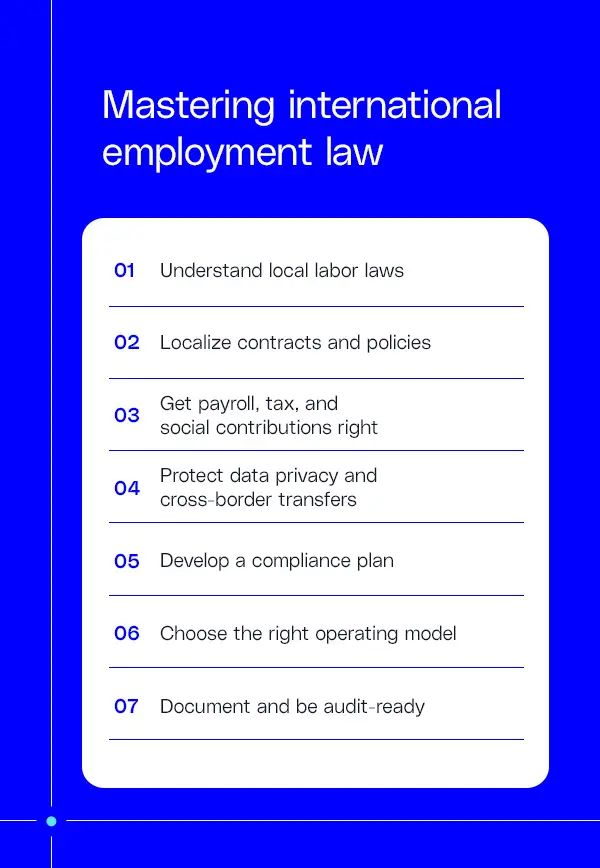
A well-rounded strategy can help you manage local labor law compliance throughout your expansion journey. You'll need a plan that anticipates local requirements, adapts quickly, and scales with your workforce. Keep these tips in mind:
-
Understand local labor laws. For each location, document the basics, such as employee versus contractor rules, misclassification penalties, mandatory benefits, minimum wages and overtime requirements, termination, and severance. Globalpedia provides valuable information on labor laws and regulatory requirements across different regions.
-
Localize contracts and policies. Use locally compliant employment contracts in the applicable language, with country‑specific clauses. Align your company handbook with local law. A centralized handbook outlining global labor policies can ensure a consistent understanding and practice across your organization. Use Gia to review or draft employment contracts, handbooks, and company policies to ensure they meet local legal standards.
-
Get payroll, tax, and social contributions right. Confirm registration needs, pay frequency, wage payment methods, statutory deductions, and employer contributions. Track equal pay and pay transparency obligations where applicable. Validate benefits funding and enrollment timelines to avoid gaps.
-
Protect data privacy and cross‑border transfers. Track HR data flows, select appropriate legal bases for processing, and apply transfer mechanisms. Implement retention schedules, access controls, and security measures consistent with national rules and frameworks.
-
Develop a compliance plan. Keep your compliance plans current with new regulations that emerge and with changes to existing rules. Assign country “owners,” set a compliance calendar for renewals and filings, and follow legal updates. Train managers on local do's and don'ts, and schedule periodic audits of contracts, payroll, and benefits vendors. Use Gia to get accurate, updated, jurisdiction-specific improvement suggestions as you build your plan.
-
Choose the right operating model. Decide when to set up a local entity versus partnering with an EOR. An EOR handles in‑country employer obligations, keeps pace with legal changes, and accelerates hiring while reducing risk.
-
Document and be audit‑ready. Maintain complete employment files, time and pay records, and policy acknowledgments in the local language to support compliance. Global hiring experts and compliance tools can help you stay ahead of issues.
Use Gia to stay compliant with international employment laws
Stay on top of evolving employment laws with Gia. Gia is agentic AI built on a proprietary knowledge base that includes expertise from hundreds of legal professionals, over 100,000 vetted documents, and more than 1,500 government sources to give you answers you can trust. With Gia, you can:
-
Access up-to-date information on employment laws and regulations in 50 countries and all 50 U.S. states.
-
Get alerts on upcoming changes in employment law that may impact your global workforce.
-
Get context-specific answers to your toughest compliance questions.
-
Generate compliant HR documents.
-
Check employment contracts for missing clauses and compliance risks.
-
Solve routine and complex HR challenges.
It's never been easier to anticipate potential compliance risks.